This is part of our preparation series Guide for the Production Orale of your DELF Exam.
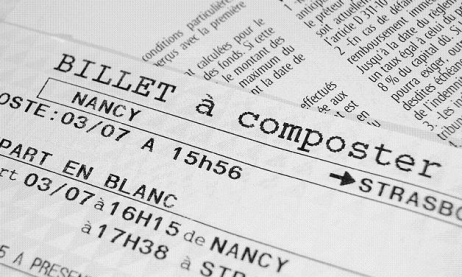 In the Production Orale Section of the DELF A1 exam you will be expected to do a role play/simulated conversation or as it is called in french “jeux de role”. For this role play the situation can vary.
This article provides a guide on how to prepare for your role-play in a situation where you would need to buy a train ticket or Acheter un billet de train.
For french terms and vocabulary that you will find useful for your french exam relating to train transportation, please refer to the post Civilisation Française part 1: Taking a Train in France (French Vocabulary)
How to plan your role play
make sure to read the instructions carefully. In a role play it is not uncommon for them to change the scenario. Highlight the most important information. In general the following information is required:
- The date that you want to go
- When do you want to go
- Do you want a round-trip or one way ticket
- The arrival and departure time of the train
- The price of the ticket
- How many tickets and for who ( prices maybe different for students, children and seniors)
- What type of tickets (first class, second class)
- What type of seats what you like (window or aisle seat)
- Ask for the total price if it is not given
- How do you want to pay
Sample Exercise:
À la gare – Acheter un billet de train
Vous êtes à la gare pour acheter un billet de train. Vous allez à Strasbourg le 17 janvier. Vous partez l’après-midi. Vous demandez les horaires de départ et d’arrivée et le prix du billet. Vous réservez trois places non-fumeurs pour un adulte et deux enfants (une petite fille de 4 ans et un garçon de 10 ans). Vous demandez deux places « fenêtre » et une place « couloir ».
Sample Response:
Employee : Mademoiselle ? Je peux vous aider ?
You : Bonjour Monsieur.[ Remember to use the correct greeting ] Je voudrais aller à Strasbourg le 17 janvier dans l’après-midi. Y a-t-il un train vers 13 h 14 h ?
Employee : Une seconde, Mademoiselle. Oui, il y en a mais plus tard, à 15h 30. Ca vous va ?
You : Oui, oui, ça va. Ce n’est pas trop tard. Est-ce qu’il est direct ?
Employee : Oui, vous avez de la chance. Il est direct [ this is a direct train but if there is a connection and you need to change train, it is refered to as “une correspondance”] .
You : Il arrive à Strasbourg à quelle heure, s’il vous plaît ?
Employee : A 18h15.
You : Ca coûte combien le billet?
Employee : Pour Strasbourg dans un express, ça coûte 75 € le billet. )
You : Est-ce qu’il a un prix pour les jeunes/ (une réduction pour les jeunes ) ?
Employee : Oui, si vous avez moins de 25 ans. Un billet pour les jeunes coûte 50 €.
You : Alors donnez-moi [ you can also say ” je voudrais = I would like” ] un billet pour un adulte et deux billets pour deux enfants, une petite fille de 4 ans et un garçon de 10 ans.
Employee : Comment souhaitez-vous ?
You : Wagon non-fumeur [ in France now there are ONLY non-fumeur], et deux places « fenêtre » et une place « couloir », s’il vous plaît.
Employee : Les voilà : 3 billets, un pour adulte et deux enfants, pour le 17 janvier à 15h 30 dans le wagon non fumeur, deux places « fenêtre » et une place « couloir ». Alors au total ça fait 175 € ..
You : –Je peux payer par carte bancaire [ you can also use the term “carte bleue” for a credit card and you can ask to pay by cheque ” par chèque” or in cash “en liquide“] ?
Employee : Oui, bien sûr
You : Au revoir. Merci. Bonne journée. [ Always remember say Thank you and to close the conversation politely]
Recommended Resources:
Books:
Currently looking.
webpages:
The following link brings you to a website that provides a very comprehensive exercise on buying a train ticket in french. It is completed with vocabulary and audio that will definitely be an added plus to your exam preparation. http://lexiquefle.free.fr/train.swf
podcast and apps:
Listen to Francais Authentique lesson 10 to 13: It provides an audio dialog between a ticket attendant and a customer who would like to buy a ticket. It also has a PDF transcript only in french. Available on Itunes or directly on the website at http://www.francaisauthentique.com/demo-pack-2-acheter-un-billet-de-train-article/
Listen to Learn French By Podcast lesson 18: “A return ticket,Paris-Toulouse,please”. It provides an audio dialog between a ticket attendant and a customer who would like to buy a ticket. Dialog in french with explanation in english. It also has a PDF transcript. Available on Itunes or directly on the website. The following was provided freely on there website.